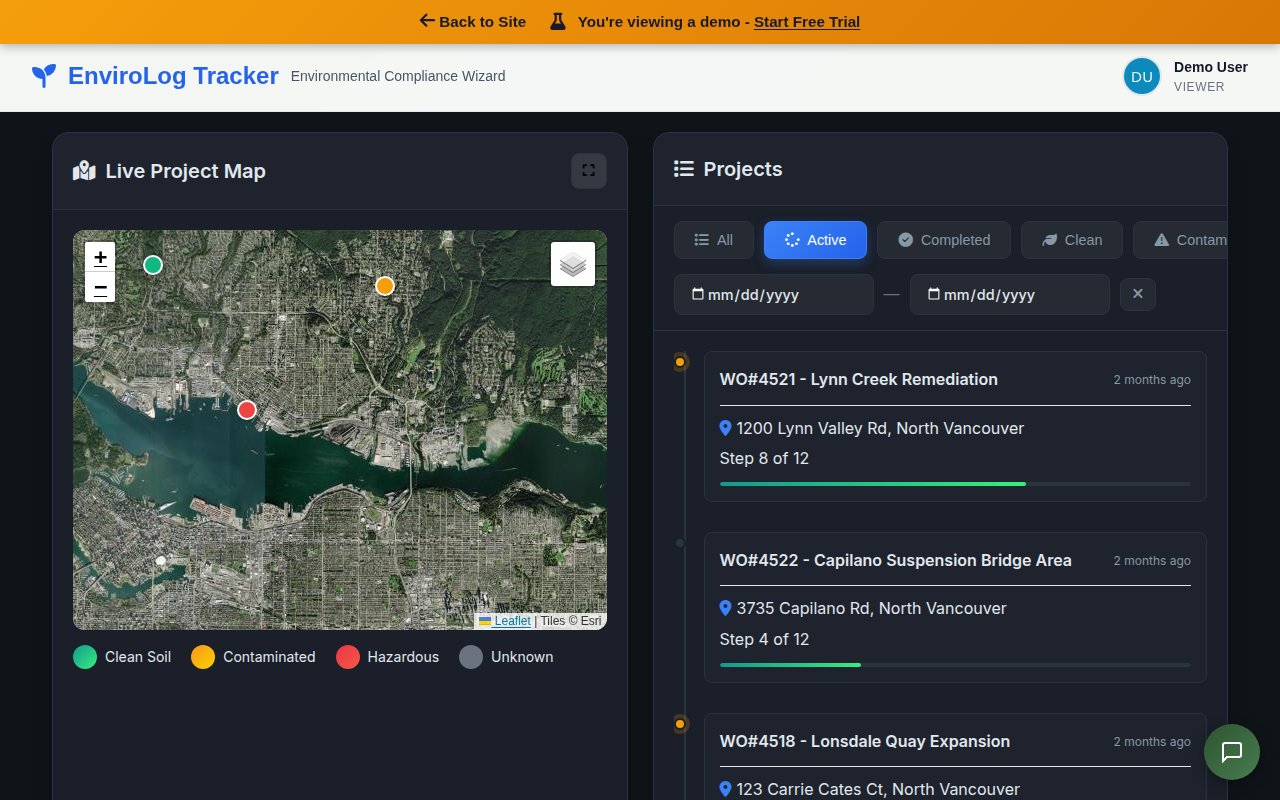
See the Software in Action
Real software built for environmental compliance. Not a mockup.
Gas station sites are among the most common contaminated properties requiring environmental cleanup. Underground storage tank removals, petroleum hydrocarbon plumes in soil and groundwater, and vapour intrusion concerns all need systematic tracking from initial assessment through regulatory closure. NVES manages the entire remediation lifecycle.
Decades of fuel storage often leave behind petroleum hydrocarbon contamination from tank leaks, line failures, and overfills. Characterizing the extent of contamination and managing cleanup requires extensive sampling and documentation.
Dissolved-phase petroleum plumes can migrate off-site and impact neighbouring properties. Monitoring well networks, quarterly sampling, and plume delineation require long-term tracking and trend analysis.
Petroleum vapours from contaminated soil and groundwater can migrate into buildings. Assessing and mitigating vapour intrusion risk at nearby occupied buildings adds urgency and complexity to gas station remediation.
Manage the investigation from preliminary assessment through detailed site characterization. NVES tracks each sampling event, lab results, and delineation status for soil, groundwater, and soil vapour.
Visualize dissolved-phase contaminant concentrations across your monitoring network over time. Track plume extent, identify concentration trends, and demonstrate natural attenuation or active remediation progress.
Monitor remediation system performance including soil vapour extraction rates, groundwater pump-and-treat volumes, and mass removal calculations. Track system uptime and generate performance reports for regulators.
Track progress toward site closure criteria. NVES compares current conditions against cleanup standards and identifies when closure applications can be submitted, saving months of uncertainty.
Real software built for environmental compliance. Not a mockup.
Environmental consultants and petroleum companies use NVES to manage gas station remediation from tank pull to regulatory closure.